
In manufacturing, you can choose the ideal adhesive that should - on paper - bond flawlessly for your application. But if the surface isn’t prepared correctly, it may fail.
At Gleicher Manufacturing, we’ve spent decades helping engineers, designers, and production teams troubleshoot bonding failures. And often, the culprit is the same: surface contamination you can’t see, predict, or control—unless you plan for it.
The Contamination You Can’t See (But Will Appear Later)
Imagine this: your team assembles what appears to be a pristine component. The adhesive is applied perfectly. Cure time hits its mark. Everything passes QC.
Three months later, the part returns with a full adhesive failure.
Why? Possibly because something was on the surface that you could not see. This “invisible enemy” includes:
• Oils, greases, and handling residue
• Dust and airborne particulates
• Oxidation layers and corrosion
• Metal fines and machining debris
• Moisture condensation from temperature swings
Any one of these can create a microscopic barrier that prevents adhesive from bonding properly and dramatically reduces bond strength. Your best bet to ensure bond strength is to have a surface prep protocol, but why is it so important?
Surface Energy: The Quiet Variable That Makes or Breaks Adhesive Bonds
Surface energy determines how well an adhesive bonds. Materials with higher surface energy allow adhesives to spread easily and make complete contact. On the other hand, lower-surface-energy materials resist wetting and prevent proper adhesive flow. Think of your car; when it is freshly waxed, water beads up and nothing sticks (low surface energy). But when the wax wears off, things stick better and water doesn’t bead as much (high surface energy).
Metals like aluminum and steel generally have high surface energy when clean, making them good candidates for adhesive bonding. In contrast, plastics like polyethylene and polypropylene have naturally low surface energy, which can make them more challenging to bond. But here's the catch. Even high-energy materials lose that advantage when contaminated.
That thin film of oil from a fingerprint on your high surface energy component? It dramatically reduces the effective surface energy at the bond interface. The adhesive now interacts with the oil rather than the metal. You end up bonding to the contaminant instead of the substrate. That bond might look fine initially, but it fails quickly under stress or environmental exposure.
Proper surface preparation increases surface energy by removing contaminants and, in some cases, physically or chemically modifying the substrate to increase surface energy.
Two Types of Failure—and What They Tell You
Bond failures fall into two distinct categories.
Adhesive failure occurs when the adhesive separates from the substrate surface. You see this when the adhesive peels away cleanly, leaving the substrate looking relatively untouched. This type screams inadequate surface preparation.
Cohesive failure happens when the adhesive or substrate material itself breaks apart. The bond interface remains intact, but the material surrounding it gives way. This indicates good adhesion but suggests that the adhesive or the substrate couldn't withstand the applied stress.
In the bonding world, cohesive failure is considered a success – it stuck! The goal for our customers is to not have either type of failure. That is why it is so important to discuss and review prep protocols as well as product usage when choosing materials and adhesives for a project.
Proven Methods That Deliver Reliable Bonds
Different substrates demand different prep strategies. A strong surface-prep plan typically includes one of the following methods.
1. Cleaning & Degreasing
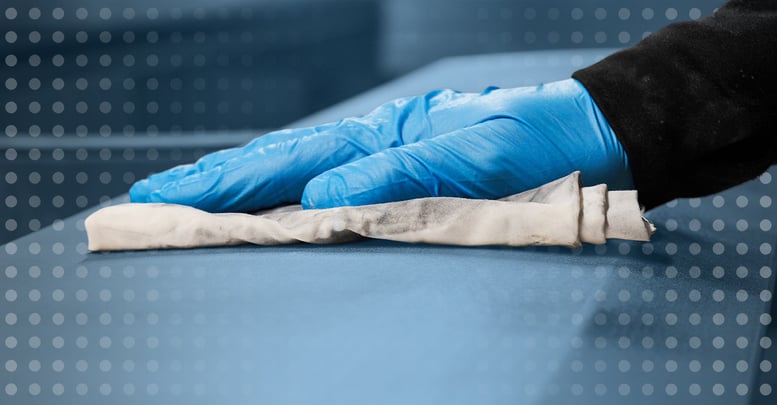
Cleaning and degreasing remove the obvious stuff. Solvents like acetone, methyl ethyl ketone, or isopropyl alcohol dissolve oils and organic contaminants. You apply them with clean, lint-free cloths, changing them frequently to prevent contamination from spreading. The choice of cleaning solvent matters. Acetone handles oils and greases effectively. Alcohol works well for lighter contamination. And, of course, you need to know how they will affect your substrate, as some plastics are not compatible with aggressive solvents.
2. Mechanical Abrasion
Mechanical abrasion physically removes surface layers while increasing surface area. Sandblasting, grinding, and sanding with abrasive pads create microscopic peaks and valleys. These surface irregularities provide adhesives with more surface area to grip and can redirect crack growth away from the bond interface. After using a mechanical abrasion method, the critical next step is to clean again to remove the debris generated by the abrasion process.
3. Chemical Treatments
Chemical treatments go beyond simple cleaning. Acid etching removes oxides and creates micro-roughened textures on metals. These treatments alter the surface chemistry to promote better adhesive interaction. Different metals require different chemical approaches. Titanium responds well to sulfuric acid etching. Aluminum benefits from anodizing treatments.
Advanced Surface-Activation Technologies
Some substrates, particularly low-surface-energy plastics, resist conventional cleaning methods. These materials require advanced treatments to achieve reliable bonds. Examples of such treatments include corona, plasma, and flame treatments.
Corona Treatment
Corona treatment uses electrical discharge to modify surface chemistry. Corona discharge breaks molecular bonds on the plastic surface and introduces oxygen-containing functional groups. These new functional groups dramatically increase surface energy and provide bonding sites for adhesives. The process happens quickly, making it practical for high-volume production.
You'll find corona treatment commonly used for polyethylene, polypropylene, and other polyolefin plastics. These materials naturally possess such low surface energy that adhesives simply bead up rather than spreading. Corona treatment transforms these difficult-to-bond surfaces into adhesive-friendly substrates.
Plasma Treatment
Plasma treatment works similarly but uses ionized gas rather than electrical discharge. Plasma systems can clean, etch, and functionalize surfaces in a single process. They remove organic contamination, create surface roughness, and simultaneously modify surface chemistry. Plasma treatment is especially valuable in aerospace applications, where bond reliability can be a matter of life or death. These advanced surface treatments enable successful bonding with materials previously considered difficult to bond, including many of the substrates used with reclosable fasteners.
Flame Treatment
Flame treatment exposes plastic surfaces to an open flame, oxidizing them and increasing their surface energy. This method works well for films, foils, and packaging materials.
Material-Specific Considerations
Every substrate presents unique challenges.
Metals generally need degreasing followed by either abrasion or chemical treatment.
High-performance adhesive systems like VHB tape demand particular attention to surface preparation protocols.
Plastics demand careful consideration. Aggressive solvents can damage some thermoplastics. Others contain additives that continuously migrate to the surface, creating ongoing contamination. You might successfully clean a plastic part only to have contaminants bloom to the surface again within hours. These challenges apply whether you're working with structural adhesives or pressure-sensitive materials, such as hook-and-loop fasteners.
Composite materials add another layer of complexity. Peel ply residue, release agents, and surface contamination from manufacturing all interfere with bonding.
The Most Overlooked Variable in Surface Prep: Time
The time factor in surface preparation is often overlooked but is crucial for successful bonding. It requires patience and attention to detail, making the audience feel the need for these qualities in their work.
Something that also needs to be considered is the time gap between surface preparation and adhesive application. During this time, contamination can happen; airborne particles settle, moisture condenses, oils migrate, VOC’s redeposit.
A perfectly prepared surface can become compromised in minutes.
Best practice suggests bonding as soon after surface preparation as practically possible.
What Proper Prep Delivers
Properly prepared surfaces deliver:
• Enhanced and more predictable bond strength
• Longer adhesive life
• Better environmental resistance
• Fewer field failures or warranty claims
• More freedom in engineering design
• Greater confidence in structural or load-bearing joints
This is why so many manufacturers rely on Gleicher for application development and bonding process support.
Avoiding the Invisible Enemy
Surface preparation isn't optional. It's a fundamental requirement that determines whether your adhesive bonds succeed or fail.
The invisible nature of contamination makes surface preparation particularly challenging. You can't rely on visual inspection or simple tests to verify adequate preparation. You need robust processes, consistent execution, and sometimes specialized measurement equipment to ensure surface quality.
Different materials and applications demand different preparation approaches. Success requires understanding your specific substrates, selecting appropriate preparation methods, and executing those methods consistently. When you get surface preparation right, everything else in your bonding process becomes easier.
At Gleicher Manufacturing, we've spent over 75 years helping engineers and production teams achieve reliable adhesive bonding. We understand that surface preparation often makes the difference between success and failure. Whether you're working with standard materials or tackling challenging bonding applications, proper surface prep delivers the foundation your bonds need to perform.
Want to discuss your specific bonding challenges? Our adhesive solutions specialists can help you develop surface preparation protocols that deliver consistent results. Call (888) 818-5798 or contact us to start the conversation.